
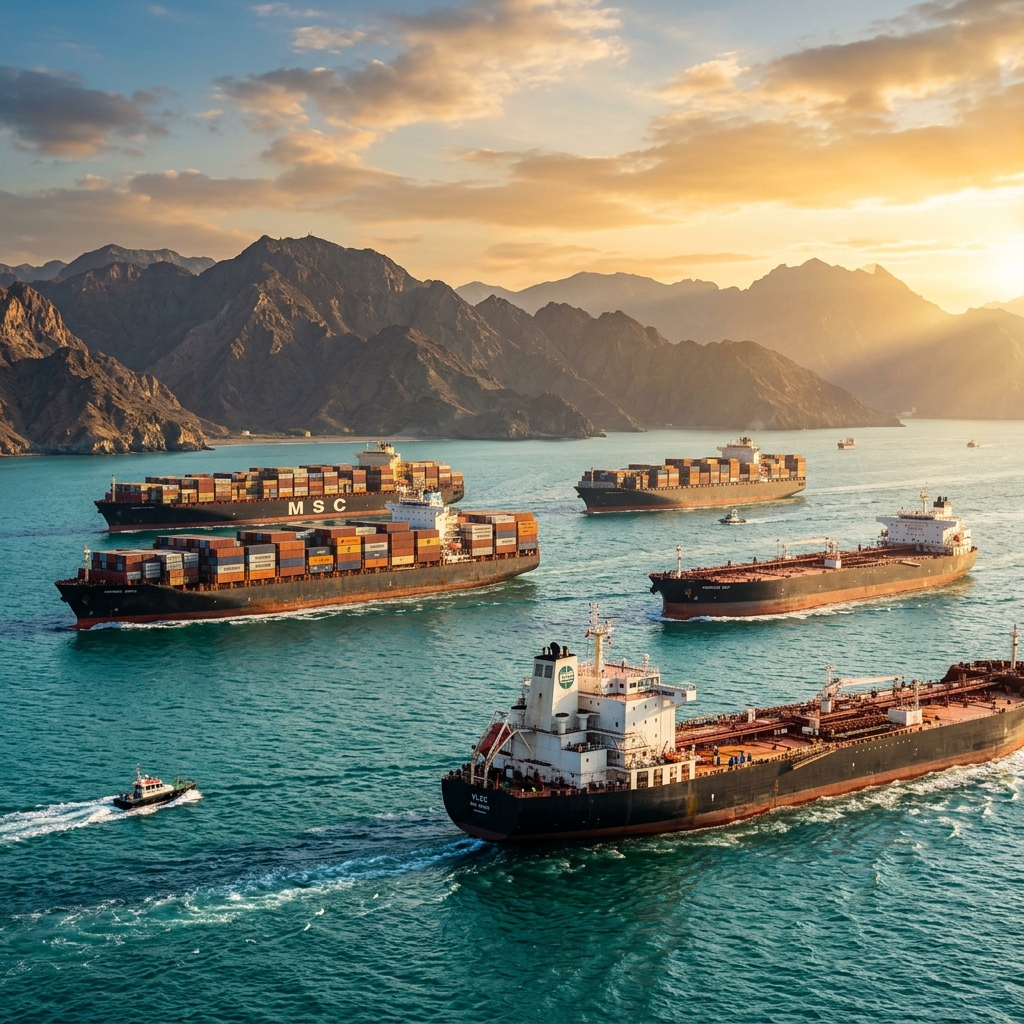
In what international diplomats and global security analysts are describing as one of the most critical geopolitical developments of the year, Iranian state officials confirmed on August 6–7, 2026, that draft bilateral negotiations regarding commercial maritime navigation through the Strait of Hormuz have reached their final stage. The strategic agreement, mediated primarily through diplomatic channels in Muscat, Oman, aims to establish formal commercial guarantees and de-escalate maritime friction along the vital waterway.
The Strait of Hormuz, a narrow maritime passageway connecting the Persian Gulf with the Gulf of Oman and the Arabian Sea, handles over 20% of total worldwide crude oil consumption and a substantial portion of liquefied natural gas (LNG) daily. Any diplomatic agreement ensuring uninterrupted commercial transit represents a monumental stabilization event for global energy markets, international shipping lines, and macroeconomic trade confidence.
The Oman Mediation Framework and Diplomatic Breakthrough
Speaking at a high-level press briefing in Tehran, Iranian foreign ministry representatives stated that technical committees from both Iran and Oman have finalized the core parameters of the maritime framework. The proposed treaty focuses on enhanced radio-communication protocols between passing merchant vessels and coastal control centers, joint environmental hazard response, and clear guidelines regarding inspection procedures in international waters.
Omani diplomats have been working tirelessly behind the scenes for over four months to bridge remaining gaps between regional stakeholders. Sultanate representatives in Muscat served as trusted intermediaries, facilitating continuous technical exchanges that addressed both commercial shipping safety and regional sovereignty concerns. International observers note that the imminent signing of this agreement signals a pragmatic turn toward regional maritime security cooperation after years of sporadic friction.
Global Market Reactions and White House Statements
Reactions from major world powers and international financial markets have been swift and cautiously optimistic. Addressing reporters during an executive press briefing, President Donald Trump acknowledged the ongoing diplomatic negotiations, indicating that Washington has monitored the Muscat dialogue closely and views maritime free-flow as essential to global economic stability.
"Ensuring that global commercial shipping and energy tankers can move safely through the Strait of Hormuz without disruption is a priority for the entire world. If this agreement guarantees free navigation, maritime safety, and regional security, it will be a positive step forward for global economic peace and commodity price stability."
Energy market analysts responded immediately to the news on Thursday, with Brent crude futures stabilizing after weeks of geopolitical risk premiums. Maritime insurance syndicates in London also indicated that war-risk insurance premiums for commercial tankers transiting the Persian Gulf could decrease significantly once the treaty is officially ratified, signed, and published.
Historical Context: Why the Strait of Hormuz Matters
The strategic importance of the Strait of Hormuz date back decades. Measuring only 21 miles wide at its narrowest point, the shipping channel requires giant crude carriers to navigate narrow 2-mile-wide transit lanes in both directions. Over the past four decades, any escalation in the region has historically triggered immediate spikes in global gasoline prices and shipping delays across Asian, European, and American markets.
By establishing clear, internationally recognized maritime protocols, the new accord aims to eliminate ambiguity at sea, preventing accidental naval encounters from spiraling into market-disrupting crises.
Key Pillars of the Draft Strait of Hormuz Accord:
- Safe Commercial Passage Guarantees: Explicit protections preventing unauthorized seizures or interdictions of registered merchant vessels in international shipping lanes.
- Joint Maritime Traffic Management: Implementation of real-time digital tracking and communication protocols managed through Omani and regional navigation centers.
- Environmental & Emergency Response Protocols: Rapid deployment mechanisms for oil spill containment and maritime distress rescues across the Gulf.
- De-escalation Hotline: Direct emergency communication channels between naval commanders to prevent misunderstandings at sea.
Implications for Global Energy Markets and Supply Chains
For international supply chains already navigating high operational costs, a formalized agreement in Hormuz offers immense relief. Energy analysts at global financial institutions emphasized that preserving free transit through the strait prevents energy price shocks that could otherwise trigger inflationary pressures in consumer economies.
As diplomatic delegations prepare for the final signing ceremony expected in Muscat later this month, security analysts remain focused on the implementation phase. If successfully executed, the accord could serve as a durable template for future maritime diplomacy across volatile international waterways.
Discussion