
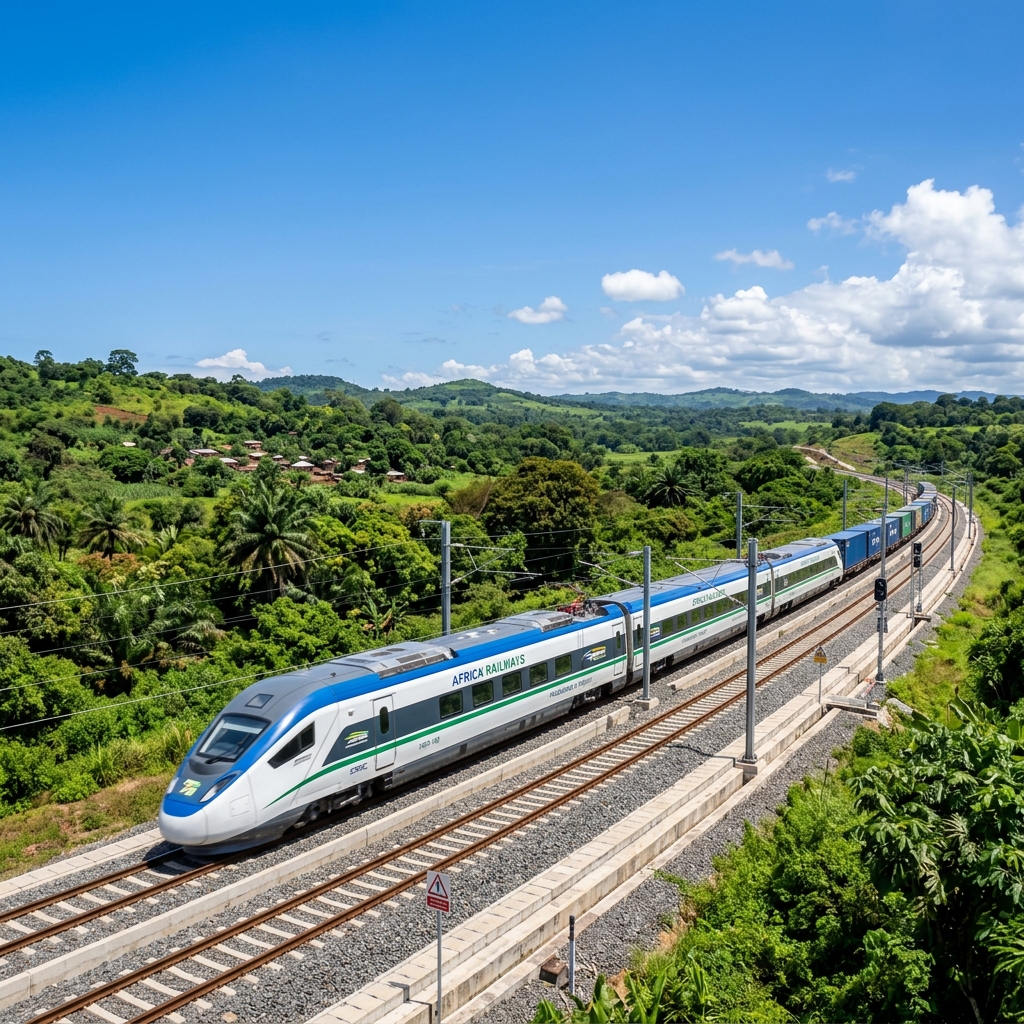
Uganda’s ambitious Standard Gauge Railway (SGR) project reached a monumental milestone in August 2026, as the Ministry of Works and Transport and Uganda Railways Corporation (URC) presented comprehensive progress updates to Parliament’s Committee on Physical Infrastructure following a major financial breakthrough.
The securing of approximately €650 million (UGX 2.6 trillion) from the Islamic Development Bank (IsDB) has served as a vital financial anchor for the Malaba–Kampala eastern section, breathing fresh momentum and global investor confidence into the nation's largest transport infrastructure undertaking since independence.
Parliamentary Scrutiny and Yapi Merkezi Early Works
Appearing before the parliamentary committee in early August 2026, URC leadership detailed the operational progress made under the Limited Notice to Proceed (LNTP) agreement signed with Turkish engineering heavyweight Yapi Merkezi. Major construction camps, geotechnical testing laboratories, and a state-of-the-art concrete sleeper manufacturing plant have already been established in Iganga district.
The parliamentary committee commended the rapid progress on preliminary civil works while emphasizing strict oversight regarding expenditure transparency, environmental impact safeguards, and local content participation. Parliament urged the Ministry of Transport and local government authorities to expedite land acquisition processes across Eastern and Central Uganda to avoid costly project standstills.
Connecting Mombasa to Kampala: Regional Economic Transformation
The 1,724 km Ugandan SGR network forms a critical leg of the broader East African Railway Master Plan, designed to link the deep-water port of Mombasa in Kenya through Malaba to Kampala, before eventually extending westward to Kigali in Rwanda, Juba in South South Sudan, and Goma in the Democratic Republic of Congo (DRC).
By replacing the legacy 100-year-old Meter Gauge Railway (MGR), the SGR is projected to slash freight transit times between Mombasa and Kampala from 14 days down to less than 24 hours. Freight transport costs are anticipated to drop by over 40%, boosting the global market competitiveness of Ugandan agricultural exports such as coffee, tea, cocoa, and processed minerals.
Detailed Engineering Specifications and Track Capacity
The SGR is designed to modern Class-1 international railway standards, featuring heavy-duty continuous welded rail, electric traction power capability, and axle load limits of 25 metric tonnes. Passenger trains will operate at design speeds of up to 120 km/h, while heavy freight trains carrying up to 4,000 net tonnes will travel at 100 km/h.
To ensure uninterrupted movement across urban hubs, elevated viaduct bridges and grade-separated crossings are being constructed through Jinja, Mukono, and Kampala city centers.
"The Standard Gauge Railway is not merely a transport corridor; it is the economic backbone of Uganda's future industrialization and landlinked regional leadership," stated a senior Ministry of Works official during parliamentary hearings. "Securing the IsDB financing demonstrates international confidence in Uganda's long-term economic stability."
Land Acquisition and Local Compensation Progress
A key focus of ongoing inter-ministerial discussions involves land compensation for communities along the designated 273 km Malaba–Kampala right-of-way. The government has disbursed funds to compensate thousands of Project Affected Persons (PAPs) across Tororo, Butaleja, Namutumba, Iganga, Luuka, Jinja, Lugazi, Mukono, and Wakiso districts.
Coordination between URC, the Uganda National Roads Authority (UNRA), and the Kampala Capital City Authority (KCCA) has ensured that SGR track realignments integrate smoothly with major urban road corridors, including the Jinja-Kampala Expressway and the Kampala Flyover expansion project.
Employment Creation and Technical Skills Transfer
In addition to trade logistics, the SGR project has generated thousands of direct and indirect jobs for Ugandan technicians, engineers, heavy equipment operators, and construction laborers. Yapi Merkezi's concrete sleeper factory in Iganga alone employs over 400 local personnel, utilizing locally sourced cement, aggregates, and steel rebar.
Technical training programs established in collaboration with vocational institutes in Jinja and Tororo are equipping young Ugandan technicians with international certifications in railway engineering, track signaling maintenance, and modern locomotive operations.
Future Outlook: Toward Main Track Construction Phase
With the concrete sleeper factory fully operational in Iganga and primary engineering designs finalized, full-scale track laying between Malaba and Kampala is scheduled to ramp up over the coming months. The completion of this flagship infrastructure corridor promises to usher in a new era of regional economic integration, employment creation, industrial competitiveness, and trade prosperity for Uganda and East Africa.
Discussion